Spring or fall, each season offers a different way to experience British Columbia's Great Bear Rainforest.
There isn’t a wrong time to visit the Great Bear Rainforest. But, if you’re planning a wildlife viewing trip, the time of year you choose can make a big difference in the experience you have.
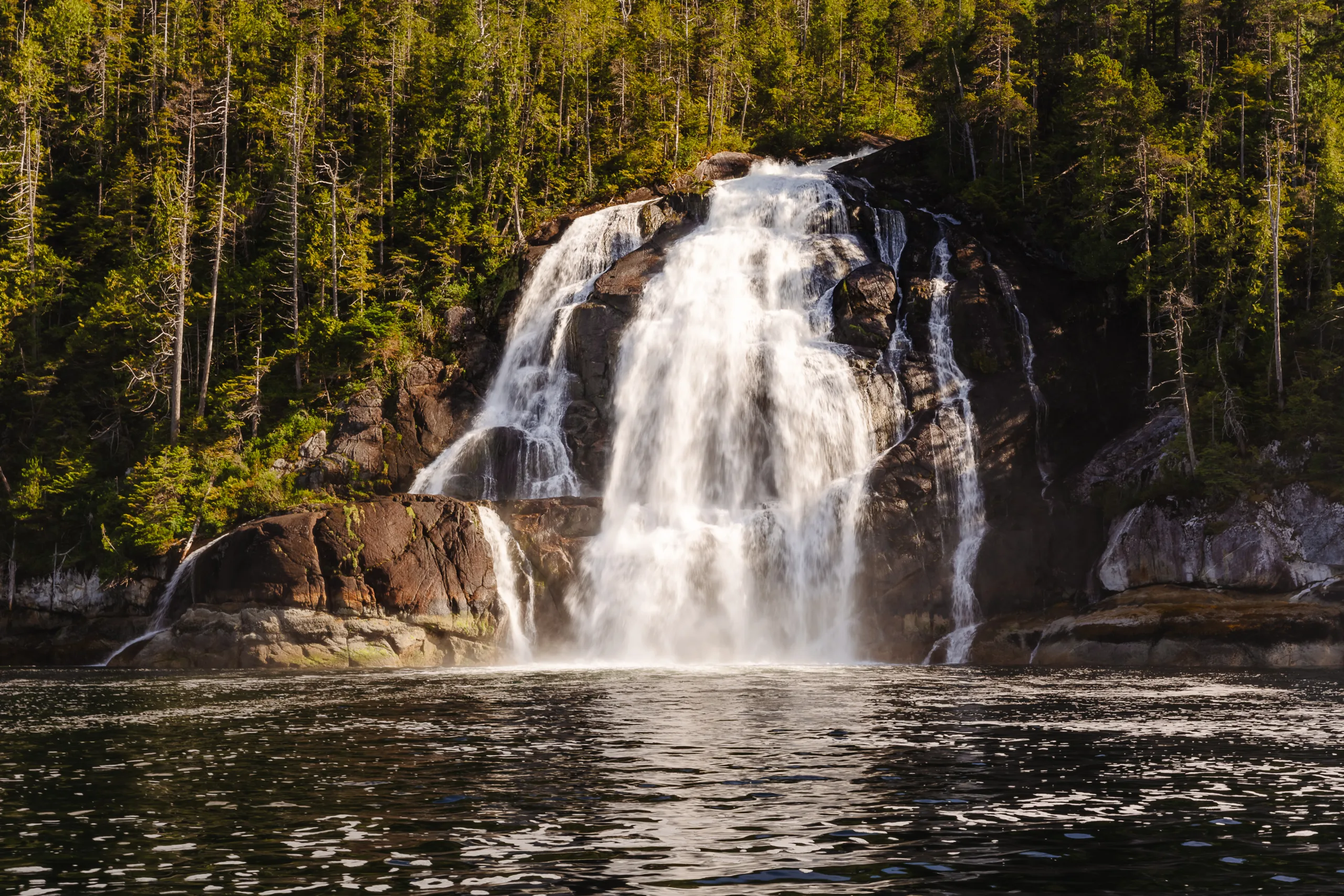
In spring, grizzly bears emerge from their winter dens and head toward the coast’s green estuaries to feed. By fall, salmon are returning to the rivers, drawing bears to the water for a very different kind of feeding season. Both are remarkable to witness. But they’re not quite the same experience. In spring the days are longer and the wether is often better. In the fall, storms come and batter the coast, sometimes with massive rainfalls even for a rainforest. In the spring wildflowers are out and snow covers the peaks of the Coast Range. In fall waterfalls are everywhere and salmon fight rushing rivers.
So, how do you decide which season is right for you?
It helps to know what changes in the rainforest throughout the year, and what you might realistically expect to see.



Spring: A Quieter Side of the Rainforest
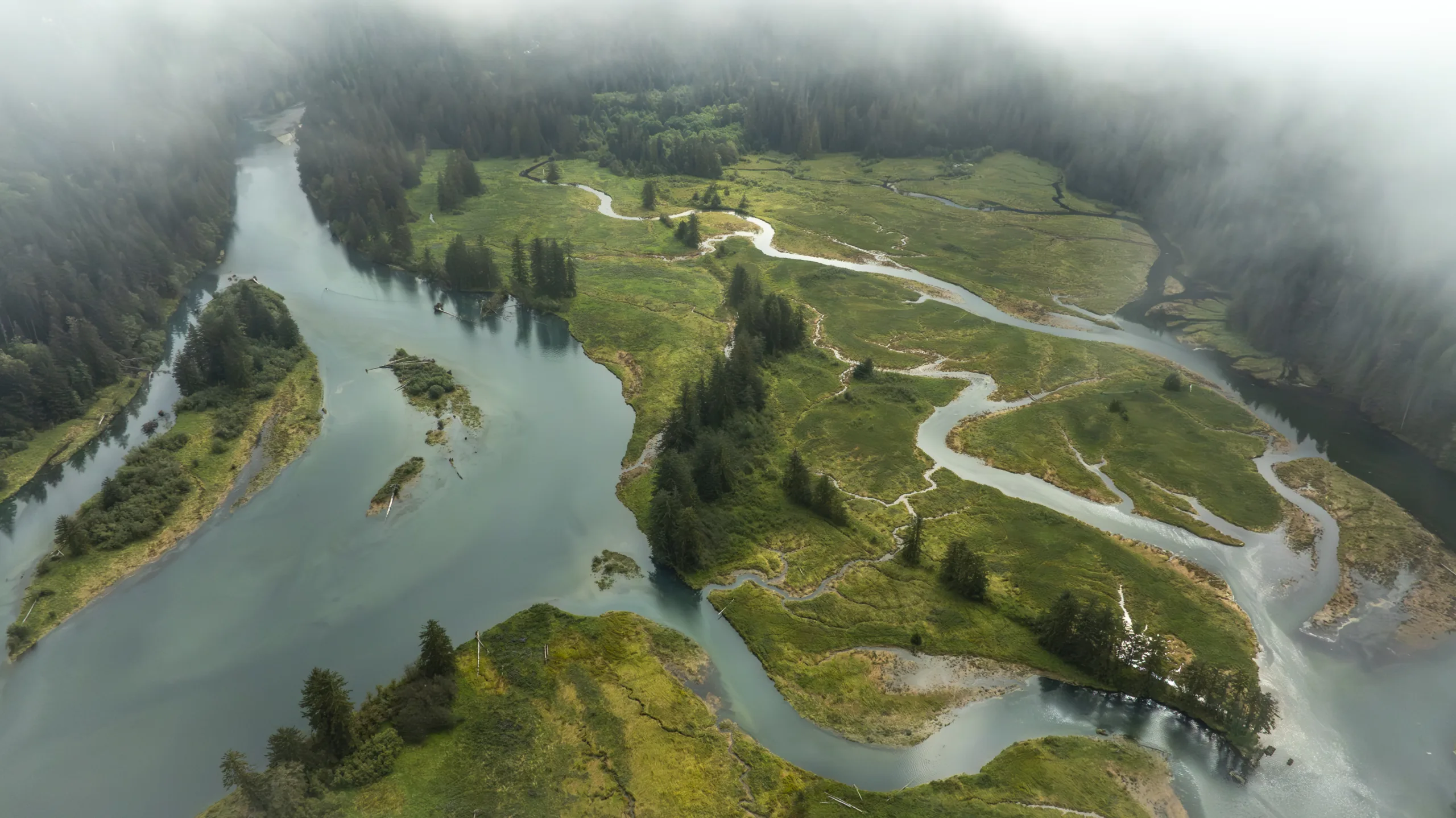
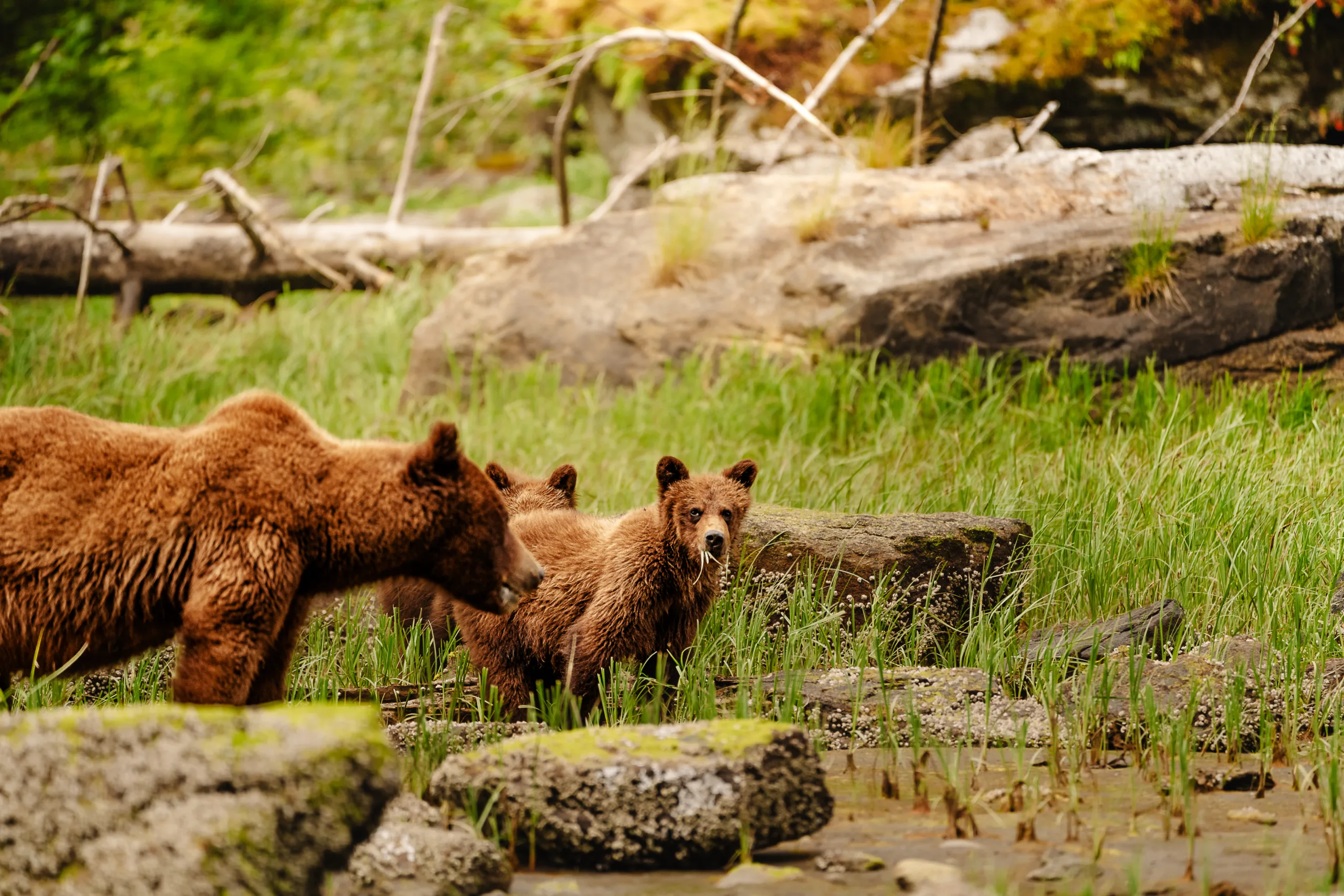
Spring in the Great Bear Rainforest is a time of gradual change. The forest begins to brighten with new growth, and along the coastline, estuaries become important feeding areas for grizzly bears coming out of hibernation. Instead of watching bears catch salmon, you may see them grazing on sedges and other fresh vegetation near the water. It’s a different side of an animal that’s often associated with dramatic hunting scenes. Spring can also be a time to encounter mothers with young cubs. Born during the winter, the cubs are beginning to explore the world outside their dens, staying close to their mothers as they learn to navigate the landscape. For visitors, these moments offer a glimpse into the quieter routines of wildlife.
Who might enjoy visiting in spring?
Spring may be particularly appealing if you’re interested in watching grizzly bears feed in estuaries, observing animal behaviour, or photographing bears against fresh green coastal landscapes. Spring is also a time with generally fair weather and the longest days of the year.
Spirit Bear Lodge’s spring tours take place in May and June, with guided wildlife viewing in areas including Fiordland Conservancy. It’s worth remembering that wildlife sightings are never guaranteed. Some days are full of activity, while others require patience. And that’s true in any season.
Fall: When the Salmon Return
By August, salmon return to coastal rivers and streams to spawn, bringing an important food source for bears preparing for winter.
Then the rainforest begins to change again as fall rains come and the undergrowth of berry bushes lose their leaves.
Grizzlies that spent spring feeding on vegetation may now be seen searching for salmon along riverbanks and in shallow water. Watching a bear fish is an entirely different experience from seeing one graze in an estuary. There’s more movement, more activity around the rivers, and often a sense that the animals are making the most of a short but important feeding season.
For wildlife photographers, fall can offer opportunities to capture bears in action, although conditions and sightings will always vary.
What About the Spirit Bear?
For some travelers, the chance to see a spirit bear is the reason they want to visit the Great Bear Rainforest in the first place.
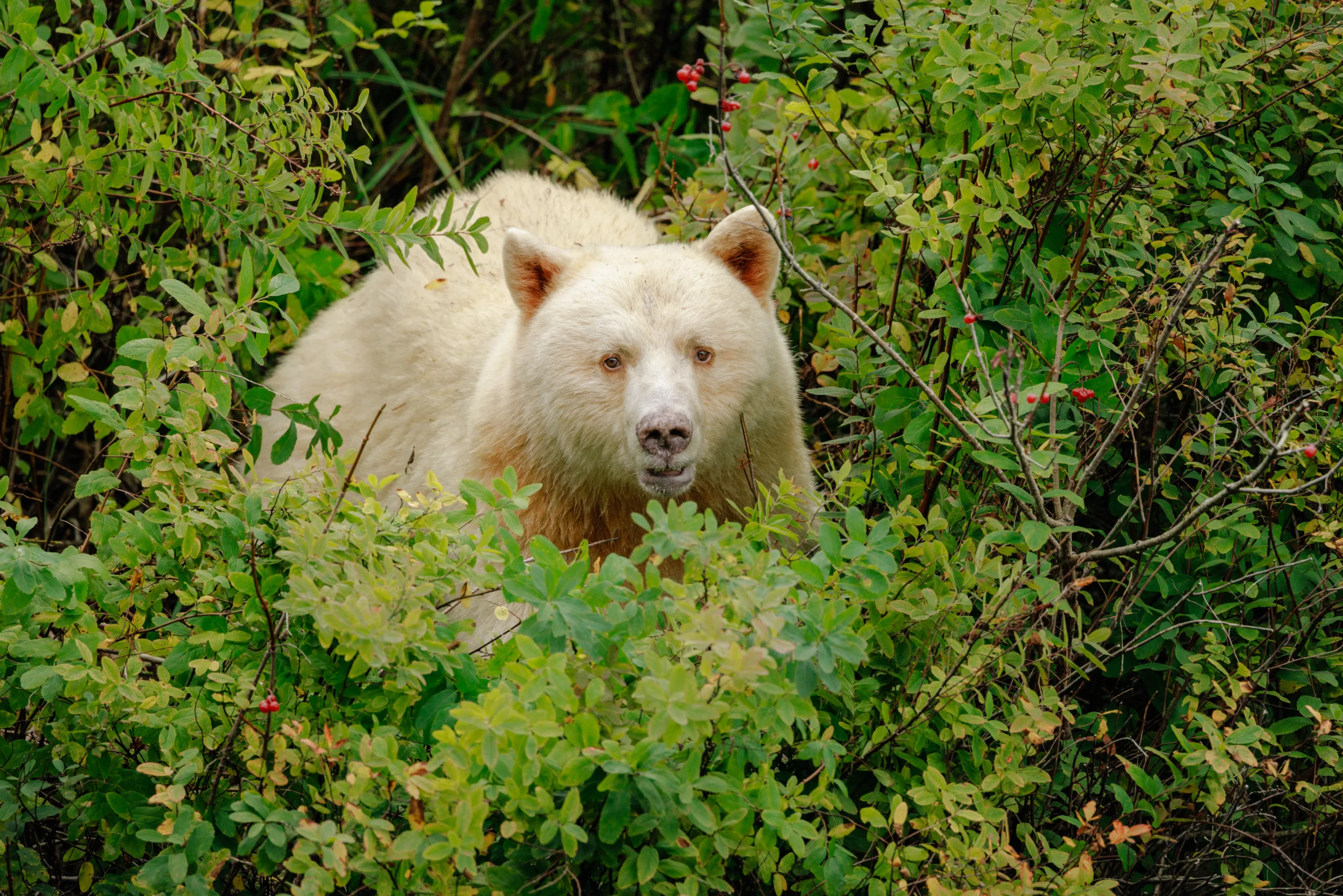
Spirit bears are a rare white-coated form of the American black bear, found in parts of coastal British Columbia. Their pale fur is the result of a genetic variation, not albinism.
They’re also culturally significant to the Kitasoo Xai’xais people and other First Nations of the region.
Fall is the season associated with Spirit Bear Lodge’s spirit bear viewing experiences, as salmon are returning to the streams and rivers to spawn.
Spirit bears are wild animals moving through a vast landscape. Their movements depend on food, a changing habitat, and other natural conditions.
For anyone who in search for a spirit bear, fall is the season to consider. Just remember that the experience is about entering their habitat respectfully, not expecting a scheduled appearance.

Beyond the Bears: Wildlife Along the Coast
Bears may be the main attraction, but they’re far from the only animals living in and around the Great Bear Rainforest.
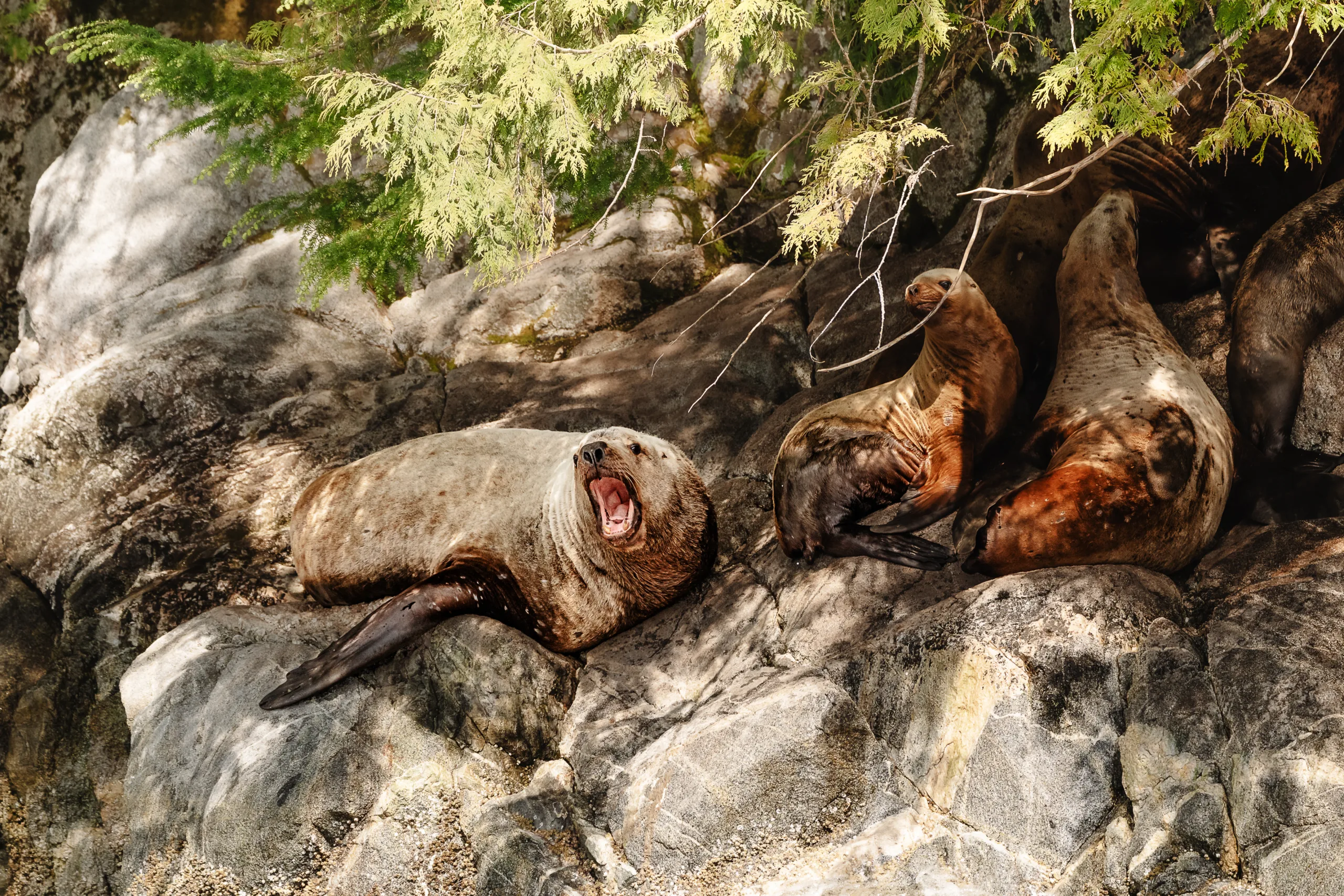
The region’s coastal waters support humpback whales, orcas, porpoises, seals, sea lions, and many other marine species. Bald eagles and other birds can be spotted along shorelines and forest edges.
These animals don’t all follow the same seasonal patterns. Some live in the area throughout the year, while others move through coastal waters depending on food availability and migration.
Whether you’re visiting in spring or fall, it’s worth keeping an eye on the water and the treetops. Sometimes the most memorable wildlife encounter is the one you weren’t expecting.
Spring or Fall: Which Season Should You Choose?
The answer depends on what you’re most hoping to experience.
If you want to see grizzly bears feeding in open estuaries and enjoy watching the rainforest come to life after winter, spring is a wonderful choice.
If you’re especially interested in bears fishing for salmon or hoping for an opportunity to see a spirit bear, fall is the better fit.
Neither season guarantees a particular sighting or wildlife encounter. What they offer is a chance to observe different parts of the natural cycle that shapes life along this coast. And for some visitors, that difference is what makes choosing a season so interesting. Another thing to keep in mind is that each season changes over its course. Fall starts with fresh fish fighting upstream and ends with more scavenging for spawned salmon on the banks. Spring starts with sedge grass a few inches long, and by summer it could be over 3 feet high.
Based in Klemtu, British Columbia, Spirit Bear Lodge offers guided wildlife experiences in the Great Bear Rainforest, within the Traditional Territory of the Kitasoo Xai’xais Nation.
Its spring and fall trips introduce visitors to different aspects of the region’s wildlife.
Spring excursions focus on grizzly bear viewing in coastal estuaries, while fall experiences offer opportunities to observe bears during the salmon season and the chance to search for the elusive spirit bear.
Local Indigenous guides bring knowledge of the region and its wildlife, helping guests understand not only what they’re seeing, but the place they’re visiting.
A trip here isn’t just about ticking an animal off a list. It’s about spending time in a landscape where wildlife moves freely and every day can unfold differently.
Spring and fall reveal different sides of the Great Bear Rainforest.
One brings grizzlies back to green estuaries after winter. The other follows the return of salmon and the bears that depend on them. Both offer opportunities to see wildlife in its natural habitat, learn about the region, and experience a part of British Columbia that remains deeply connected to the rhythms of the natural world.
So, when should you visit?
Both seasons have their own allure. If you hope to see a spirit bear and don’t mind the rain fall is probably the time to visit. If you want to search for grizzly bears in enchanted landscapes, spring is a great fit. Our honest opinion is to connect with this place in both seasons. There is so much to see and because we visit different places at different times of year and are always looking for new areas, you will want to keep coming back. Some of our guests have returned as many as six times.
To learn more about the different wildlife experiences available, explore Spirit Bear Lodge’s spring and fall tours. https://spiritbear.com/spirit-bear-tours/