
The Great Bear Rainforest
The Great Bear Rainforest on the pacific coast of British Columbia is the largest coastal temperate rainforest on earth; home to Spirit Bear Lodge and our world class cultural and wildlife tours.
Location: Central & north coast of British Columbia (BC), Canada
Total Size: 6.4 million hectares (15.8 million acres)
Forest Type: Coastal temperate rainforest (Largest intact on Earth)
Protected Area: 85% protected under the 2016 Great Bear Rainforest Agreement
Key Species: Spirit Bear, grizzly bear, black bear, grey wolf, Pacific salmon, humpback whale, orca, bald eagle
Old-Growth Trees: Sitka Spruce & Western Red Cedar, many exceeding 1,000 years old, 60–70 m tall
Spirit Bears: Estimated 50–150 individuals (as of 2024). Only place in the world to see the Spirit Bears is in the Great Bear Rainforest
British Columbia’s Great Bear Rainforest is the largest intact coastal temperate rainforest on Earth. This is a land of mist-shrouded valleys and glacier-cut fjords, old-growth forests, wildlife like rare spirit bears and rich salmon streams. Stand in awe under massive old growth trees, marvel at the variation in mosses, lichens, and numerous unique plant species.
The forest acts as a carbon sink, absorbing CO₂ from the atmosphere. In one year, an acre of mature trees can absorb the same amount of CO₂ produced when you drive your car 42,000 Kilometers (26,000 Miles). The importance of keeping this “last of its kind” forest protected cannot be denied.

“Landscapes like The Great Bear Rainforest are why we get up in the morning” -Nicole Rycroft
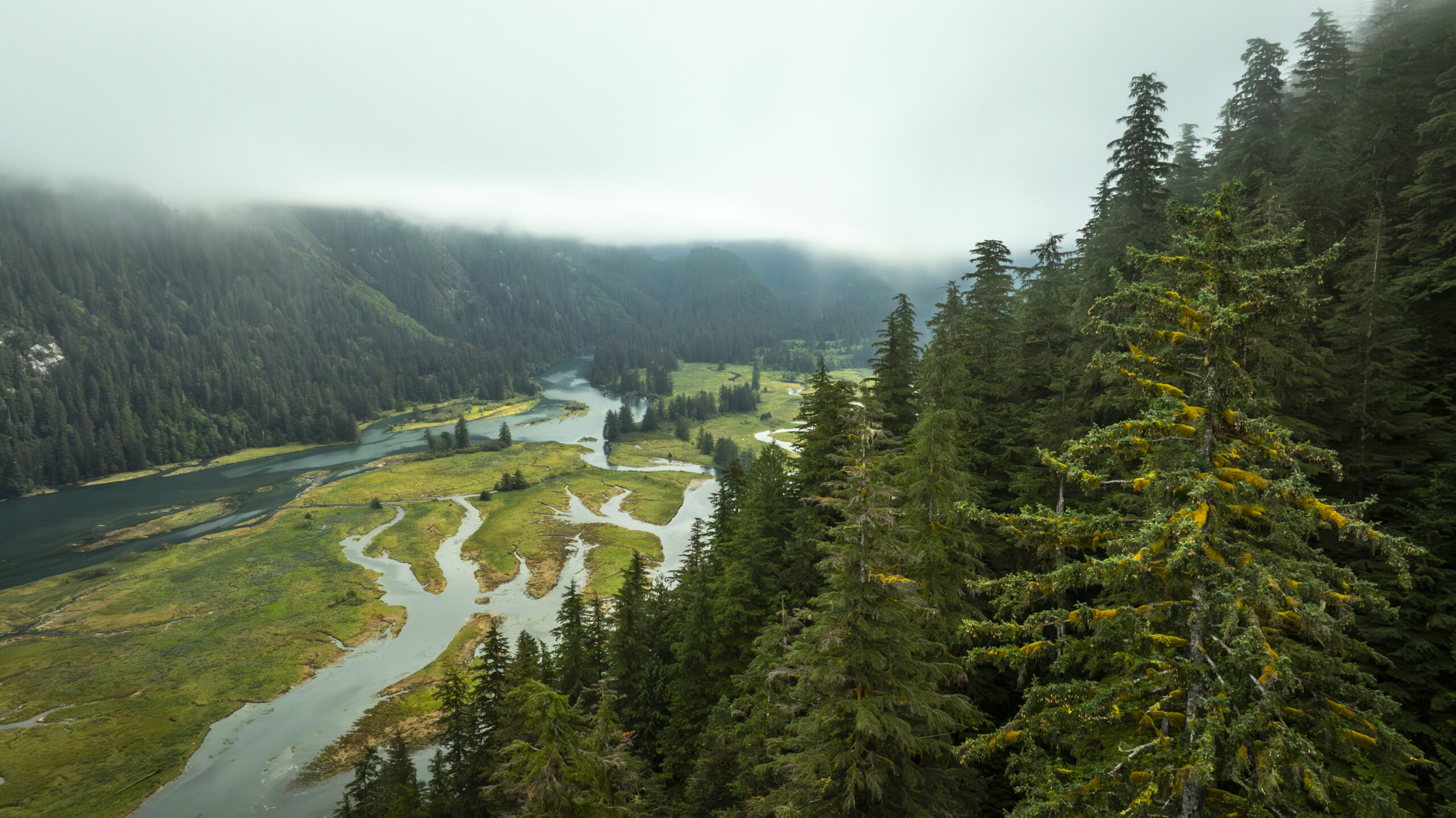
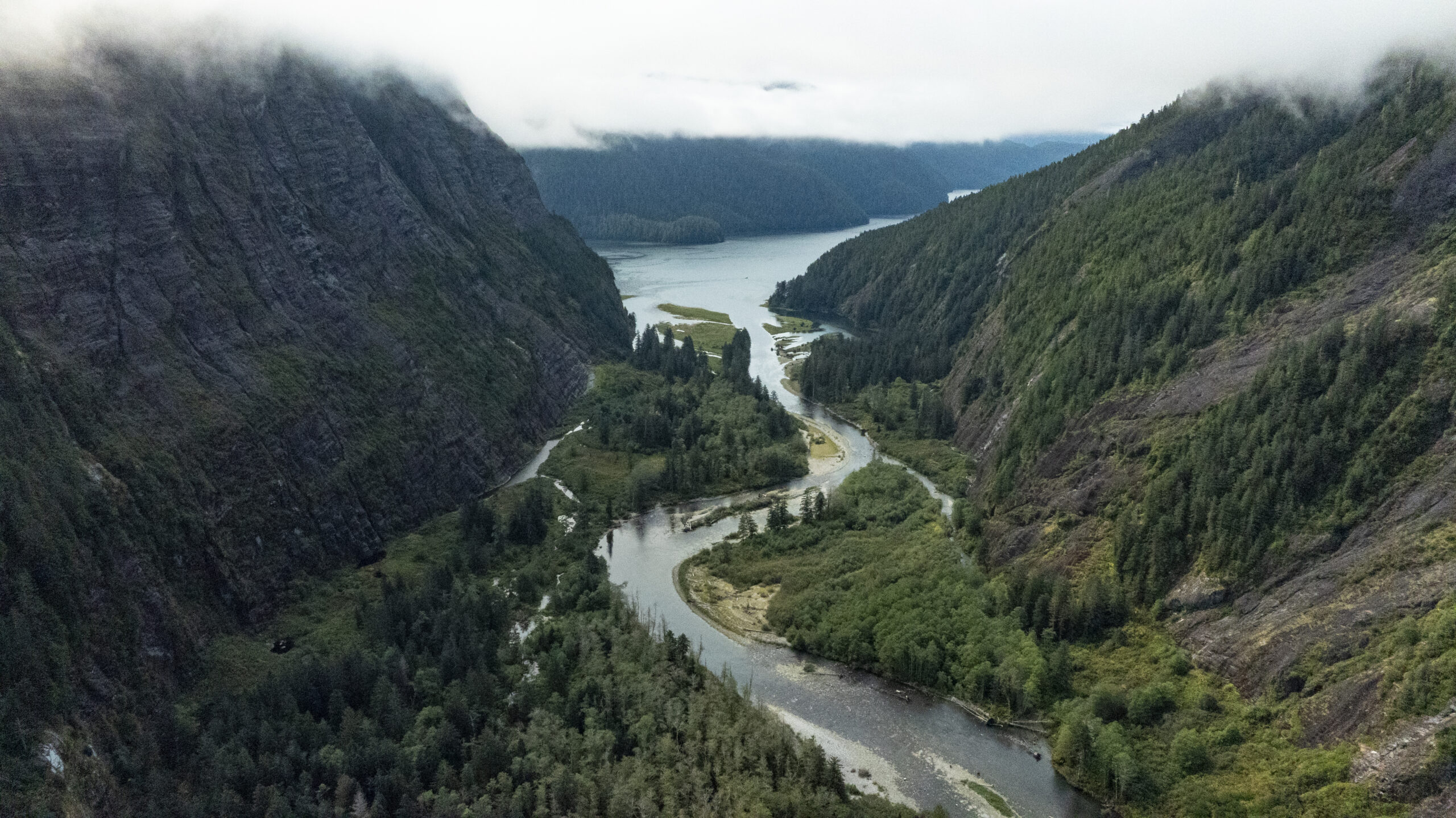
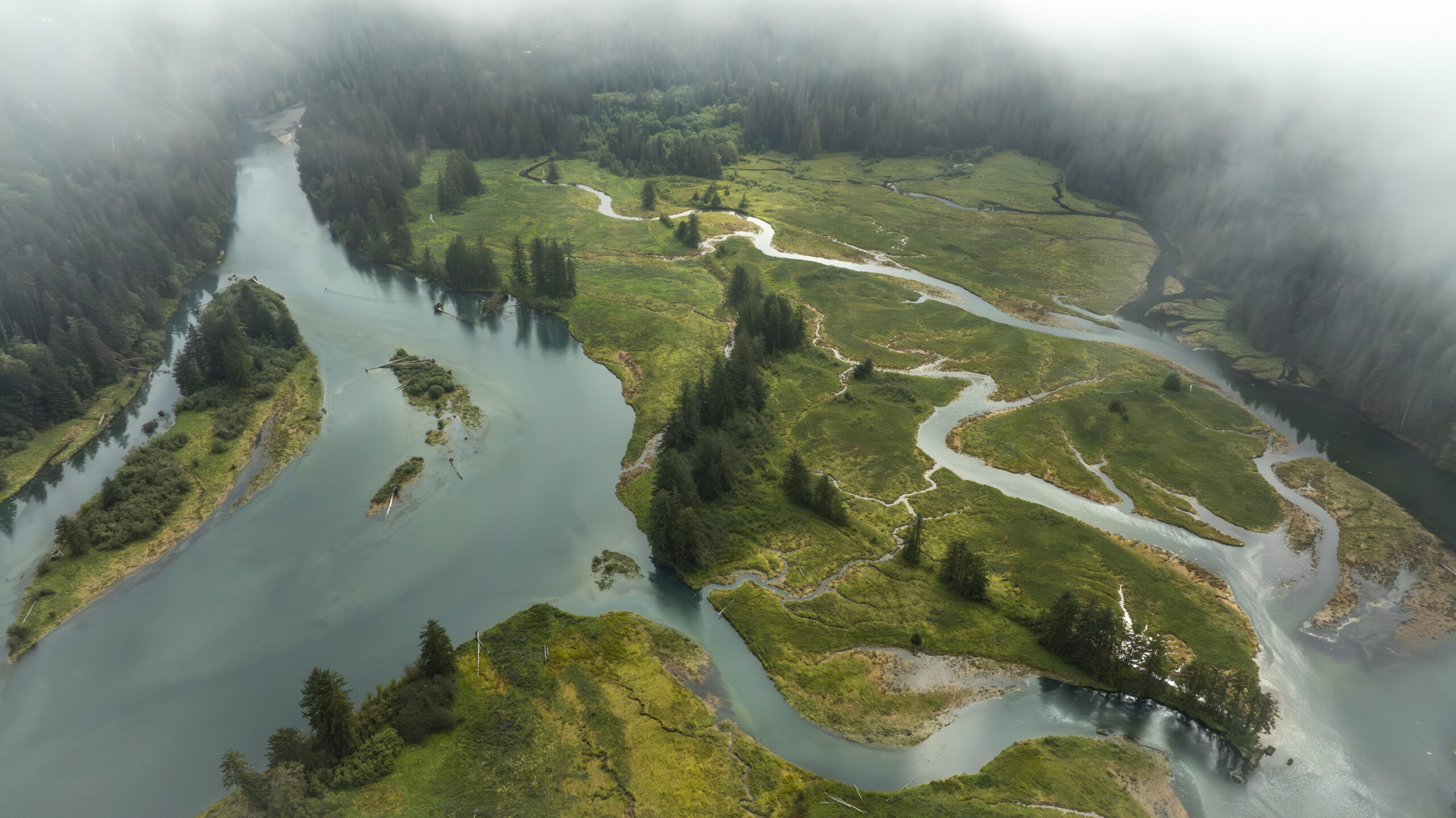
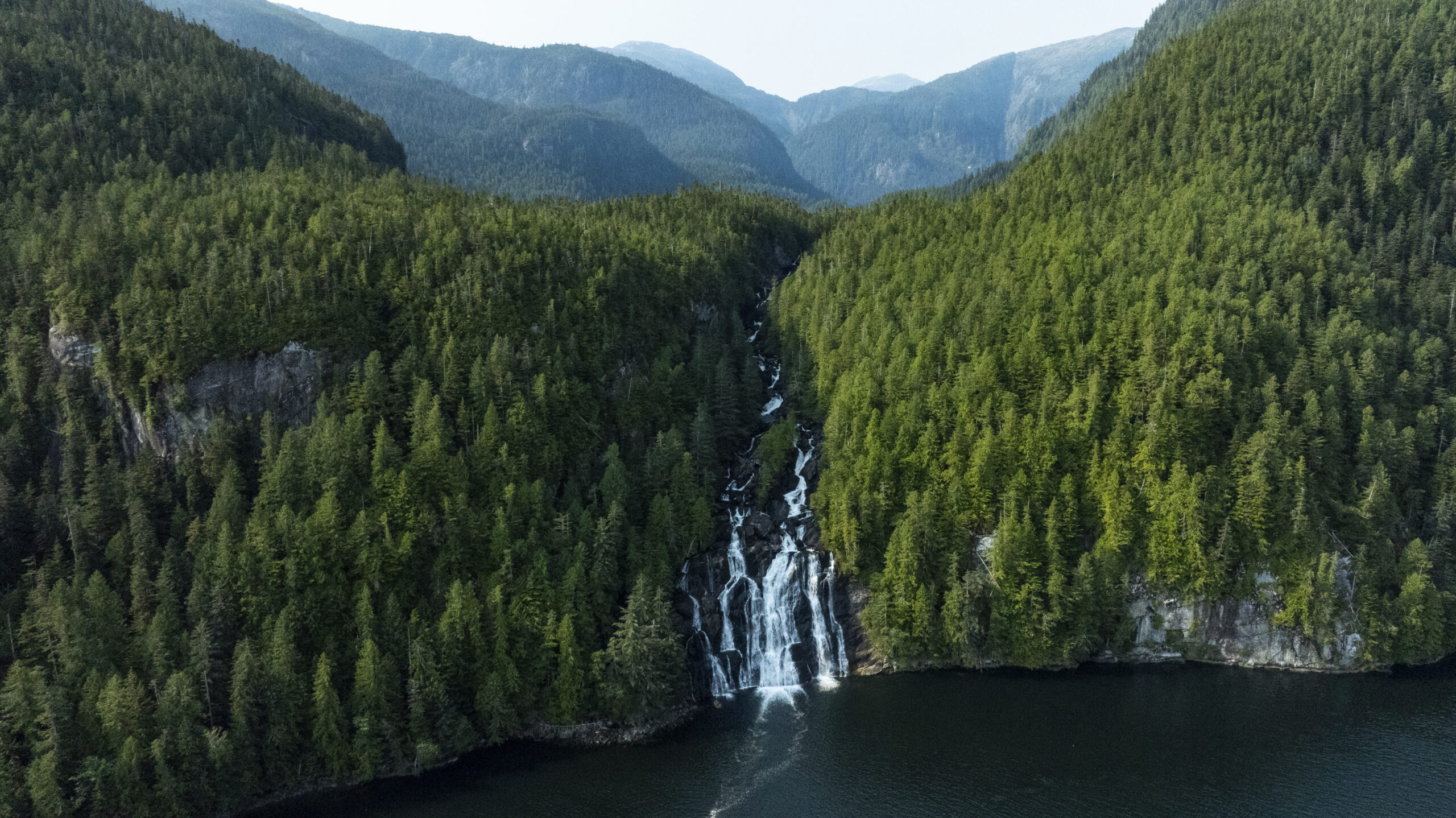
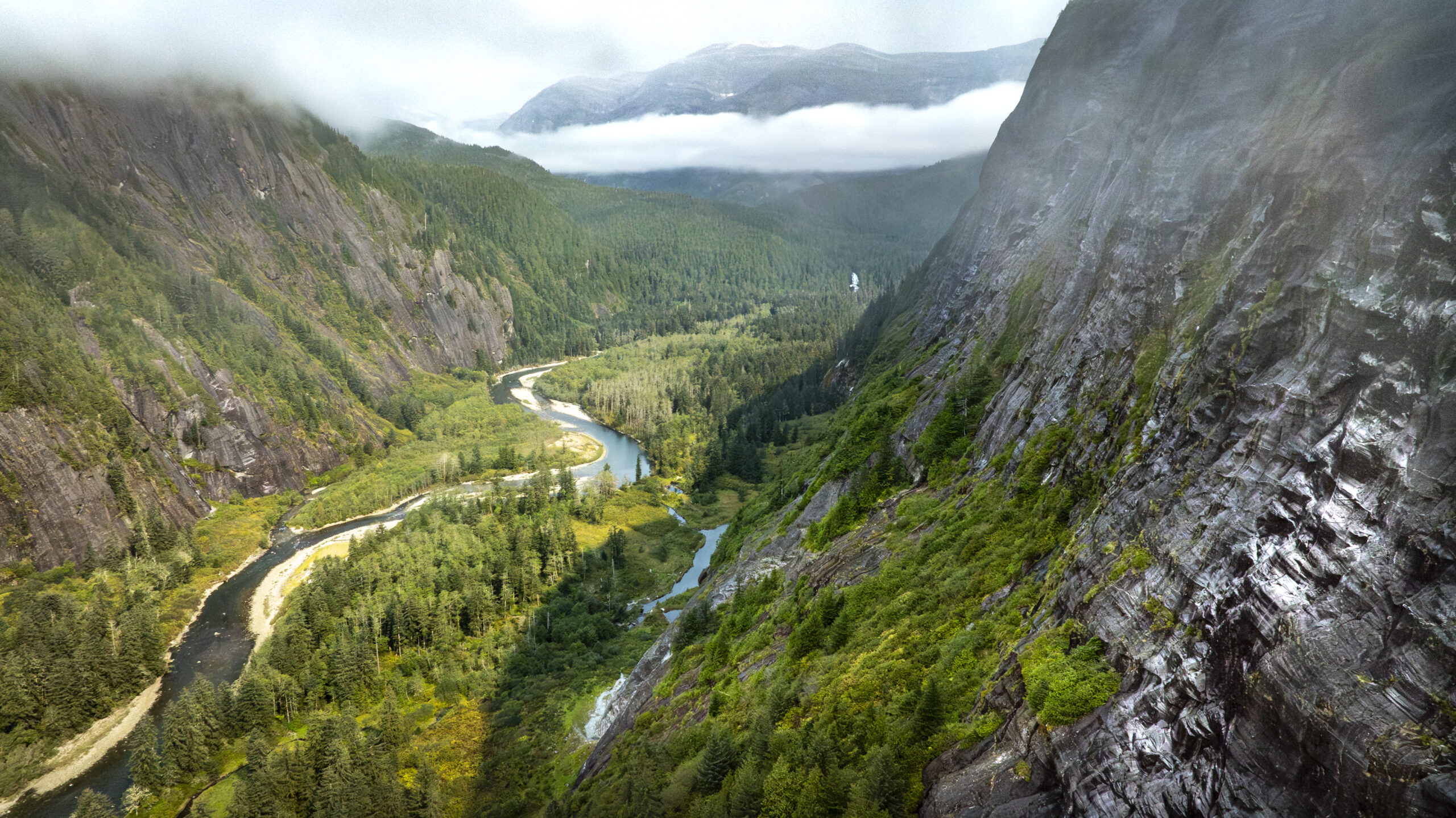
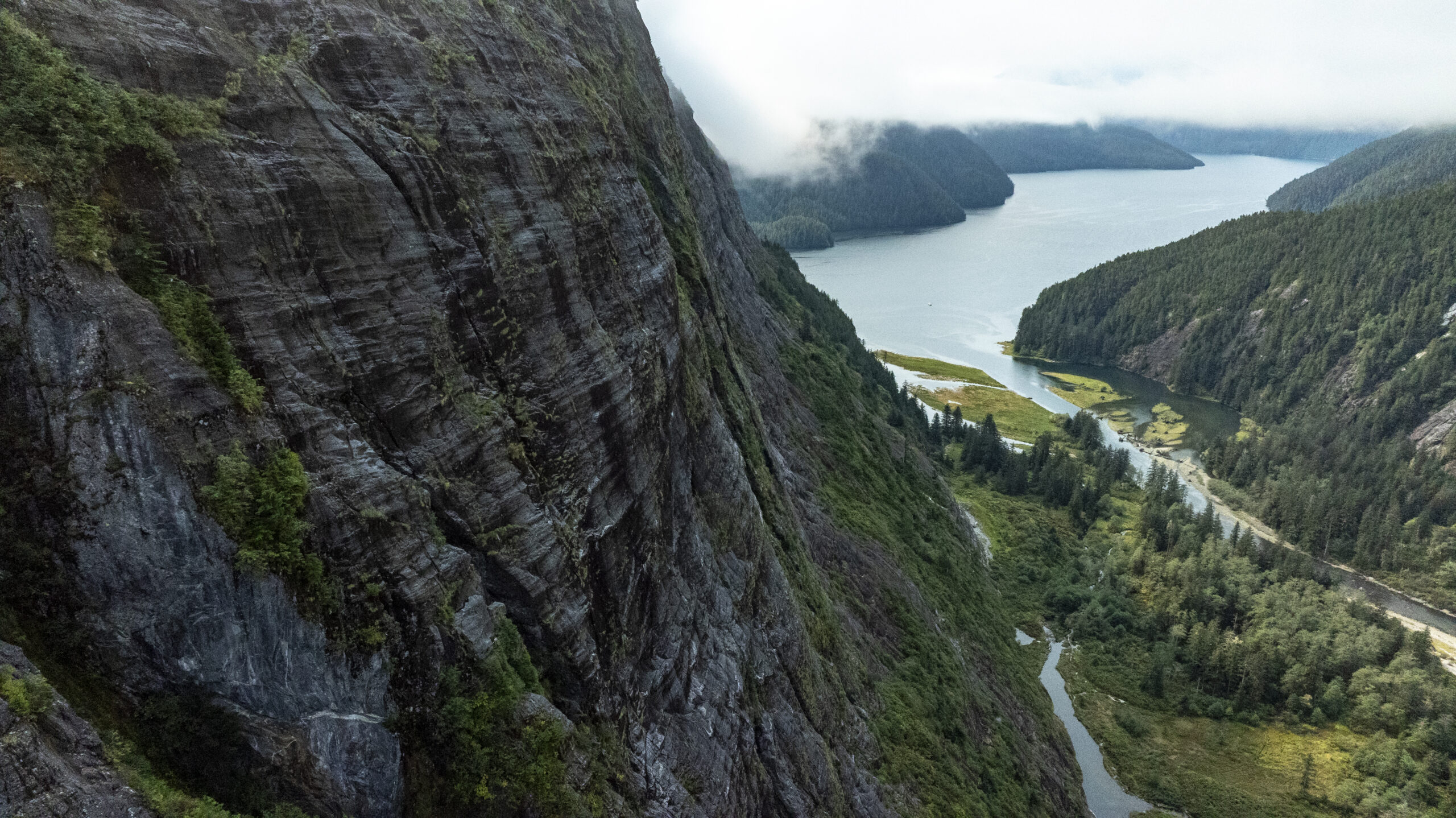
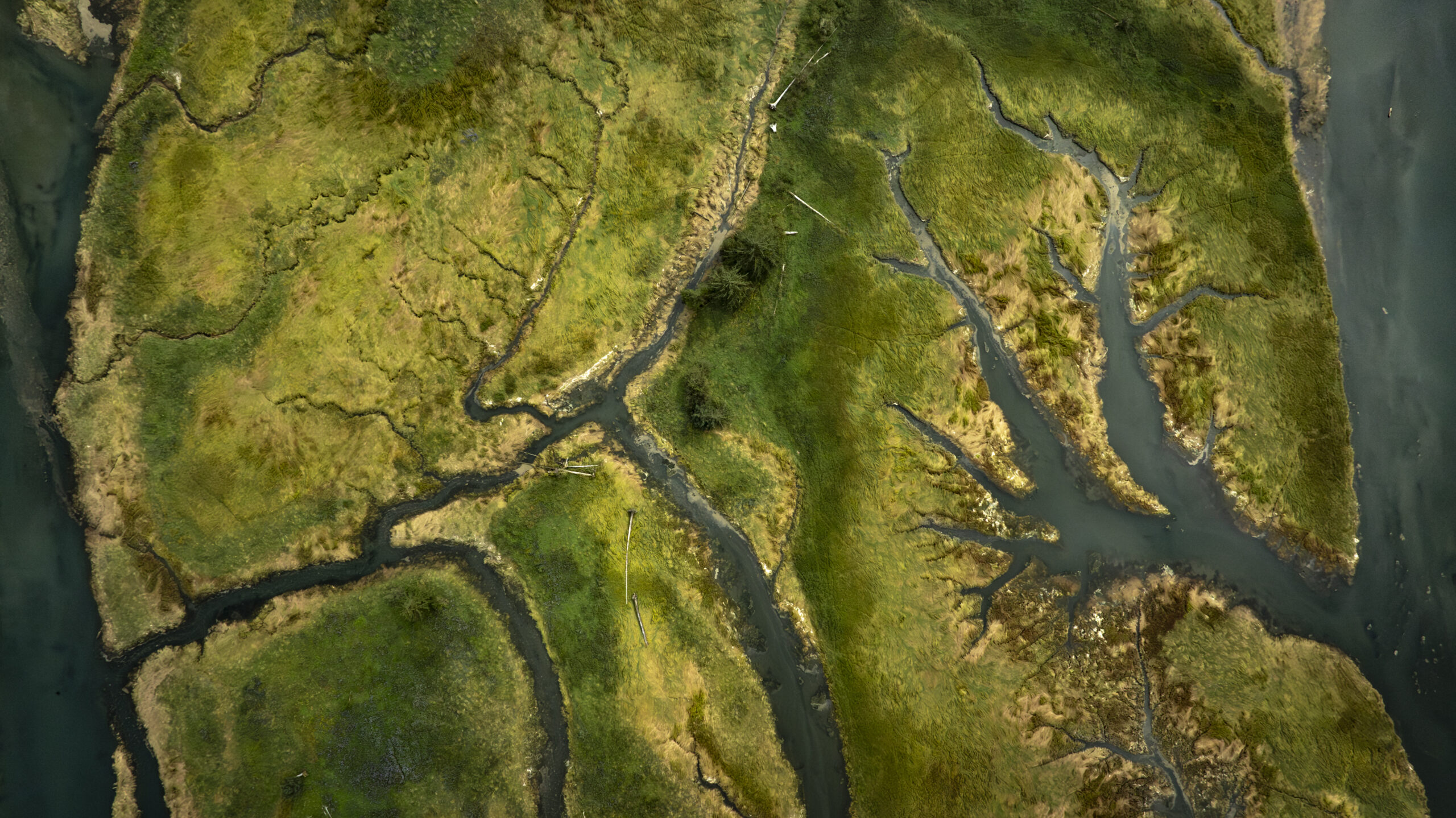
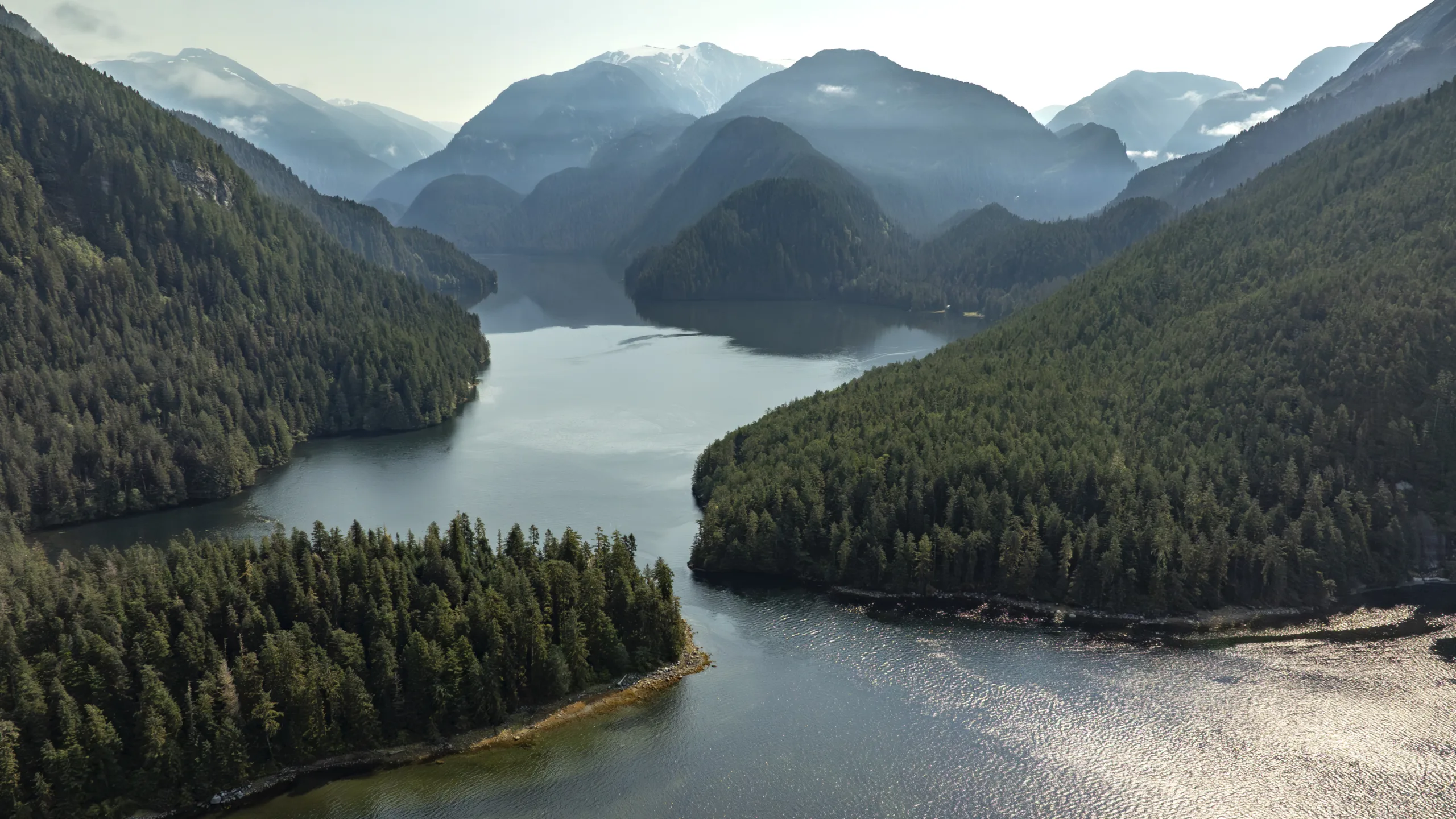

Ancient Sitka Spruce and Red Western Cedars frequently exceed 1000 years old and can attain heights from 60-70 Meters. These trees support and are supported by the surrounding ecosystem, which includes some of the largest species and the smallest organisms on the planet.
With 4.2 million acres monitored by Indigenous Guardians annually, 767 new, permanent jobs have been created in First Nations communities.
What is the Great Bear Rainforest?
The Great Bear Rainforest (also known as the GBR or BC Rainforest) is a vast wilderness on the Pacific coast of Canada. It is classified as a coastal temperate rainforest — one of the rarest ecosystems on the planet, found only along narrow bands of coastline where cold ocean currents meet mountain ranges, producing high rainfall and a mild, wet climate year-round.
Unlike tropical rainforests, the Great Bear Rainforest is defined by towering old-growth conifers, cold fjords, glacially-carved inlets, and a dense moss-covered understory. It contains one of the highest concentrations of wildlife biomass of any ecosystem on Earth, driven by its extraordinarily productive Pacific salmon runs.
Why is the Great Bear Rainforest Important?
- It is one of the last large intact coastal temperate rainforests on the planet — most others have been logged or degraded.
- It acts as a critical carbon sink: one acre of mature forest absorbs the same CO₂ produced by driving approximately 42,000 km (26,000 miles).
- It supports globally significant populations of grizzly bears, black bears, Spirit Bears, wolves, and eagles.
- Wild Pacific salmon fertilize the forest floor after spawning, linking the ocean and the land in a nutrient cycle that has continued for thousands of years.
- It is the ancestral home of multiple First Nations, including the Kitasoo Xai’xais, whose stewardship has maintained this ecosystem for millennia.
- Its biodiversity is extraordinary — rare mosses, lichens, fungi, and plant species found nowhere else on Earth have been documented here.
Where is the Great Bear Rainforest Located?
The Great Bear Rainforest is located on the west coast of mainland British Columbia, Canada. It begins just north of Knight Inlet — off the northern tip of Vancouver Island — and extends north along the BC coast to the Alaskan border, encompassing hundreds of islands, inlets, and fjords.
Great Bear Rainforest Key Locations
- Princess Royal Island: The heartland of Spirit Bear country and home to the largest concentration of Spirit Bears. On the North Coast you’ll find the Kitasoo Xai’xais Spirit Bear Conservancy, over 100,000 hectares of protected land along the Laredo Inlet.
- Gribbell Island: Another critical Spirit Bear habitat island.
- Klemtu, BC: Home of Spirit Bear Lodge, within Kitasoo Xai’xais Traditional Territory — one of the best-protected areas in the entire forest.
- Bella Bella (Waglisla): A key gateway community on Campbell Island.
- Prince Rupert: A northern gateway city accessible by BC Ferries and floatplane.
- Knight Inlet: The southern boundary of the Great Bear Rainforest.
Is the Great Bear Rainforest on Vancouver Island?
No. The Great Bear Rainforest is located on the BC mainland coast, not Vancouver Island. However, the forest begins just north of Knight Inlet, which lies off the northern tip of Vancouver Island. Many travellers pass through the Inside Passage — the waterway between Vancouver Island and the BC mainland — to reach it.
What is a Spirit Bear?
A Spirit Bear is a white-coated black bear. It is the official Provincial Animal of British Columbia. Its white coat is caused by a double recessive gene — the same biological mechanism that causes red hair in humans. A black bear carrying only one copy of the gene will appear entirely black but can pass the trait to its offspring.
How Rare Are Spirit Bears?
Spirit Bears are among the rarest mammals on Earth. Current estimates (as of 2024) suggest between 50 and 150 Spirit Bears exist in the wild — all within the Great Bear Rainforest.
Research suggests the white coat may provide a hunting advantage: fish perceive less contrast against a bright sky from a white bear than a black one, making Spirit Bears more successful at catching salmon during daylight hours.
Kitasoo Xai’xais and the Spirit Bear
Known as Moksgm’ol in the Tsimshian language, the Spirit Bear has been revered for thousands of years. First Nations oral histories describe Raven turning every tenth black bear white as a symbol of peace and a reminder of the Ice Age. First Nations communities have long prohibited the hunting of Spirit Bears — a protection that predates any provincial legislation.
Wildlife of the Great Bear Rainforest
The Great Bear Rainforest supports one of the highest densities of large wildlife in North America. Its productivity is powered by its wild Pacific salmon rivers, which bring marine nutrients deep into the forest each autumn.
Wildlife of the Great Bear Rainforest
The Great Bear Rainforest supports one of the highest densities of large wildlife in North America. Its productivity is powered by its wild Pacific salmon rivers, which bring marine nutrients deep into the forest each autumn.
Bears of the Great Bear Rainforest
- Spirit Bear: Estimated 50–150 individuals (2024). Found only in this region. Best viewed July–October at salmon streams.
- Grizzly Bear: One of the highest concentrations on the BC coast. Gather in large numbers at salmon streams in late summer and autumn.
- Black Bear: The most common bear species
Other Key Wildlife
- Grey Wolf: Coastal wolves here are genetically distinct from inland populations. They swim between islands and feed heavily on salmon and shellfish.
- Humpback Whale: Visible in the fjords and inlets, especially May–September.
- Orca (Killer Whale): Both resident and transient pods travel these waters year-round.
- Pacific Salmon: Five species — chinook, coho, sockeye, pink, and chum — spawn in hundreds of rivers and streams.
- Bald Eagle: Thousands gather at salmon streams each autumn.
- Sitka Black-Tailed Deer, Steller Sea Lion, Harbour Seal: All found throughout the region.
The Salmon – Forest Connection
Pacific salmon are the engine of the Great Bear Rainforest ecosystem. After spawning, their carcasses are dragged into the forest by bears, wolves, and eagles. As they decompose, marine-derived nitrogen and phosphorus fertilize the soil and feed the ancient trees. Studies show that trees within 50 metres of salmon streams grow significantly faster than those further away.
The Great Bear Rainforest Ecosystem
The Great Bear Rainforest is a coastal temperate rainforest — a globally rare ecosystem that occurs only where cool ocean currents create consistently high rainfall (often 2,000–4,000 mm per year) and mild temperatures year-round.
Old-Growth Trees
- Sitka Spruce (Picea sitchensis): Can exceed 90 metres in height and 1,000 years in age.
- Western Red Cedar (Thuja plicata): Frequently exceed 1,000 years old and 60–70 metres in height. Of immense cultural importance to First Nations.
- Douglas Fir, Yellow Cedar, Amabilis Fir: Other significant old-growth species forming the forest canopy.
Climate of the Great Bear Rainforest
- Annual Rainfall: 2,000–4,000 mm, with some coastal areas receiving significantly more.
- Summer Temperatures: Mild, averaging 15–20°C (60–68°F) July–August.
- Winter Temperatures: Rarely drop below 0°C on the coast, though mountain snowpack is significant.
Conservation: The Great Bear Rainforest Agreement
After more than a decade of negotiations between environmental groups, First Nations, the BC government, and the logging industry, the Great Bear Rainforest Agreement was signed in February 2016.
How Much of the Great Bear Rainforest is Protected?
- 85% of the Great Bear Rainforest’s old-growth forests are off-limits to logging.
- 9 million acres were placed under formal protection from industrial activity.
- The remaining 15% is subject to ecosystem-based management (EBM) with strict, legally binding limits.
- The Great Bear Rainforest (Forest Management) Act 2016 enshrined these protections in BC law.
Indigenous-Led Conservation
- 4.2 million acres monitored annually by Indigenous Guardians.
- 767 permanent jobs created in First Nations communities (as of 2020).
- The Kitasoo Xai’xais, Heiltsuk, Wuikinuxv, and Nuxalk Nations are among the key First Nations with territories within the rainforest.
- The 2016 Agreement formally recognized First Nations as decision-making partners, not just stakeholders.
Land Use in the Great Bear Rainforest
Land use in the Great Bear Rainforest is governed by ecosystem-based management (EBM), co-developed by First Nations and scientists. EBM sets binding limits on logging volumes, locations, and methods, prioritizing biodiversity, wild salmon habitat, old-growth retention, and First Nations cultural values above timber production.
How to Visit the Great Bear Rainforest
The Great Bear Rainforest is one of the most remote wilderness destinations in North America. There are no roads connecting most of it to the BC highway system. Getting there requires planning — but the experience is unlike anywhere else on Earth.
How to Get to the Great Bear Rainforest
- Floatplane: The fastest method. Flights operate from Vancouver, Prince Rupert, and Bella Bella to Klemtu. Flight time from Vancouver: approximately 2–3 hours.
- BC Ferries (Inside Passage): The Discovery Coast Passage or Northern Expedition routes connect Port Hardy to Bella Coola, Bella Bella, and Prince Rupert — passing directly through the Great Bear Rainforest.
- Private Boat or Charter: Many visitors arrive by sailboat, yacht, or chartered vessel through the fjords and channels.
- Cruise Ship: Several major cruise lines operate Inside Passage routes that pass through the GBR coastline.
Vancouver to Great Bear Rainforest: approximately 500–700 km by air, or 1,500+ km by sea via the Inside Passage.
Great Bear Rainforest Tours & Lodges
Spirit Bear Lodge (Klemtu, BC): 100% Kitasoo Xai’xais Nation-owned. The only lodge with legal, Indigenous-guided access to Spirit Bear viewing areas in Kitasoo Xai’xais Traditional Territory. Multi-day packages include wildlife tours, cultural experiences, and First Nations-guided excursions. Tours run July–October.
Best Time to Visit the Great Bear Rainforest
- July–October: Peak season for Spirit Bear and grizzly viewing at salmon streams.
- May–June: Best for humpback whale and orca viewing, and for lush spring forest scenery.
- October–November: Late salmon season; fewer visitors; dramatic autumn weather.
Rain is possible year-round. Pack for wet weather regardless of season.
Frequently Asked Questions
How big is the Great Bear Rainforest?
The Great Bear Rainforest covers approximately 6.4 million hectares (15.8 million acres) — an area larger than the entire country of Ireland.
How much of the Great Bear Rainforest is protected?
Under the 2016 Great Bear Rainforest Agreement, 85% of the forest’s old-growth is off-limits to logging. 9 million acres were placed under full protection. The remaining areas are subject to strict ecosystem-based management limits.
Is the Great Bear Rainforest a national park?
No. The Great Bear Rainforest is not a single national park. It is a mosaic of provincial protected areas, First Nations territories, and ecosystem-based managed forests governed under the 2016 Great Bear Rainforest Agreement. There is no entrance fee or central park authority.
What animals live in the Great Bear Rainforest?
The Great Bear Rainforest is home to Spirit Bears, grizzly bears, black bears, grey wolves, humpback whales, orcas, bald eagles, five species of Pacific salmon, Sitka black-tailed deer, river otters, Steller sea lions, and harbour seals, among thousands of other species.
What is a Spirit Bear?
A Spirit Bear is a white-coated black bear found only in the Great Bear Rainforest of BC. It is not albino — its white coat is caused by a recessive gene. An estimated 50–150 Spirit Bears exist in the wild (as of 2024), all within the Great Bear Rainforest.
Where do Spirit Bears live within the Great Bear Rainforest?
Spirit Bears are most concentrated on Princess Royal Island and Gribbell Island. Spirit Bear Lodge in Klemtu, BC offers the only legal, Indigenous-guided Spirit Bear viewing tours within Kitasoo Xai’xais Traditional Territory.
How to get to the Great Bear Rainforest from Vancouver?
From Vancouver, the most common routes are by floatplane (approximately 2–3 hours to Klemtu or Bella Bella) or by BC Ferries via the Inside Passage from Port Hardy. Most tour packages include return transportation.
Why is the Great Bear Rainforest important for climate?
The forest stores enormous quantities of carbon in its old-growth trees and soil. One acre of mature forest absorbs approximately the same CO₂ as driving 42,000 km. Protecting it from logging is one of BC’s most significant climate conservation actions.
What is the Great Bear Rainforest Agreement?
The Great Bear Rainforest Agreement is a landmark conservation agreement signed in February 2016 between the BC government, First Nations, environmental organizations, and the forestry industry. It placed 85% of the forest’s old-growth off-limits to logging, legally recognized First Nations as co-decision-makers, and enshrined ecosystem-based management in provincial law.
Is the Great Bear Rainforest in danger?
While the 2016 Agreement significantly reduced logging threats, the forest faces ongoing pressures including climate change (affecting salmon runs and precipitation patterns), oil spill risk from marine traffic, and ocean warming impacts on the marine food web. The 85% protection level remains in effect as of 2025.